Solid or sponge EPDM? A practical comparison on the door frame
An EPDM seal may use a thin lip of dense rubber or a cellular sponge contact section. Squeezing a loose sample gives little indication of how either profile will feel on a latched door. Identify which part locates the seal and which part moves during closure before comparing proposals.
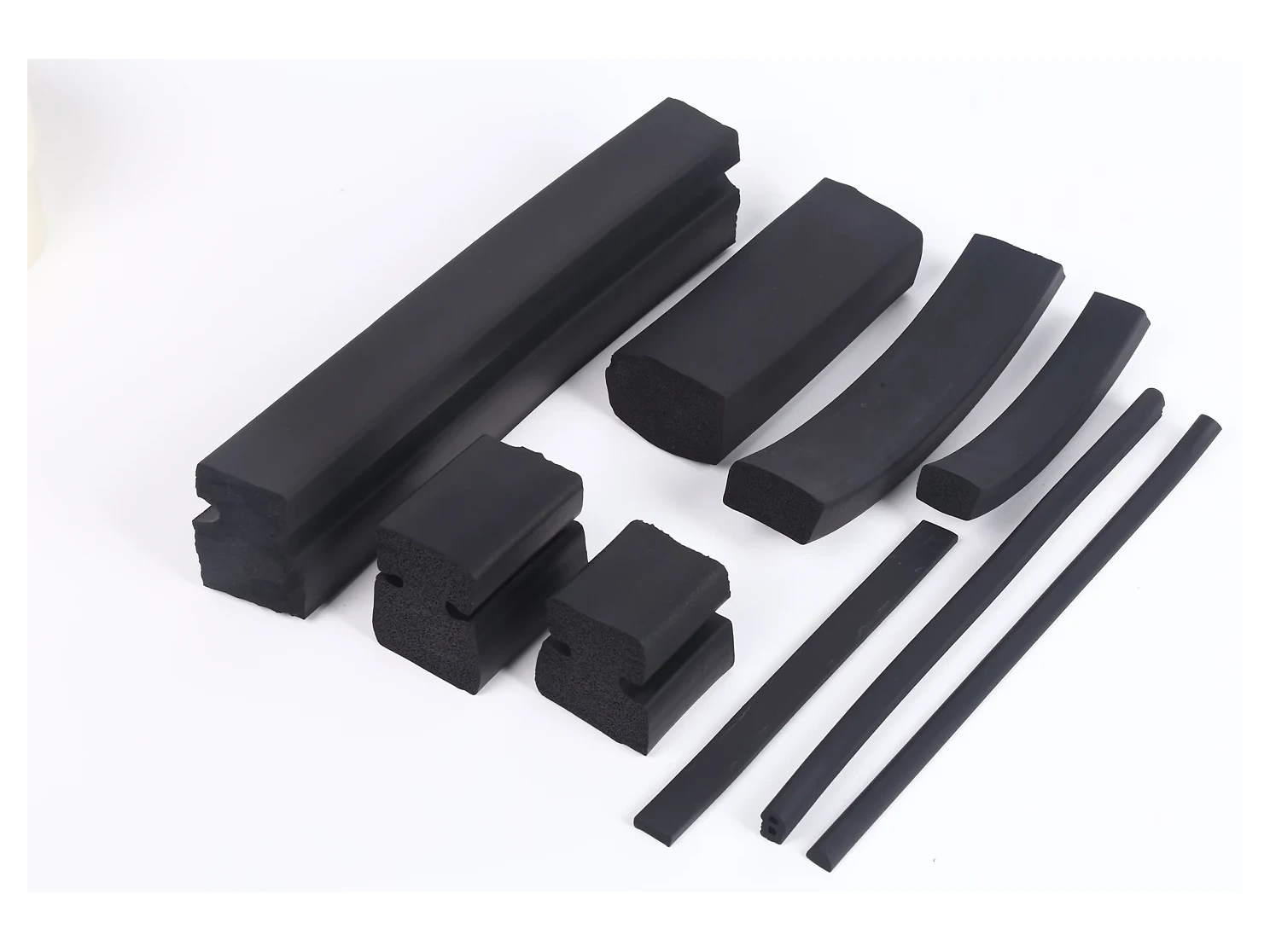
Identify construction on the cut face
Photograph a clean cut perpendicular to the extrusion. Mark the retaining foot and the part that touches the door. A dense rubber extrusion can itself contain a large hollow chamber. Ask the supplier to identify the material in each region and confirm whether a quoted compound grade applies to the whole profile or one section of it.
Give both samples the same working gap
Use equal lengths in the same groove on the same frame, with the latch adjustment unchanged. Record the force needed to reach the closed position at the usual gap. Repeat at the smallest and largest gaps observed on the assembly. Note where the force was measured and how much length was compressed. Effort measured on a short strip needs a full-perimeter trial before it can describe the feel of a complete door.
Choose the next trial from the observed problem
If the foot moves in the groove, compare the foot and groove dimensions first. If the frame varies and contact breaks along an edge, compare contact marks at the widest gap. Hold both samples closed for the same period, then open and check for displacement and recovered height at the same interval. These observations give the supplier a reproducible problem to solve when adjusting the section.