How to describe joint travel when specifying an accordion seal
A purchase request that gives only a total travel leaves an important question open. Where will the accordion section sit when it is fitted? Two joints with the same total travel can require very different amounts of opening and closing from their installed positions.
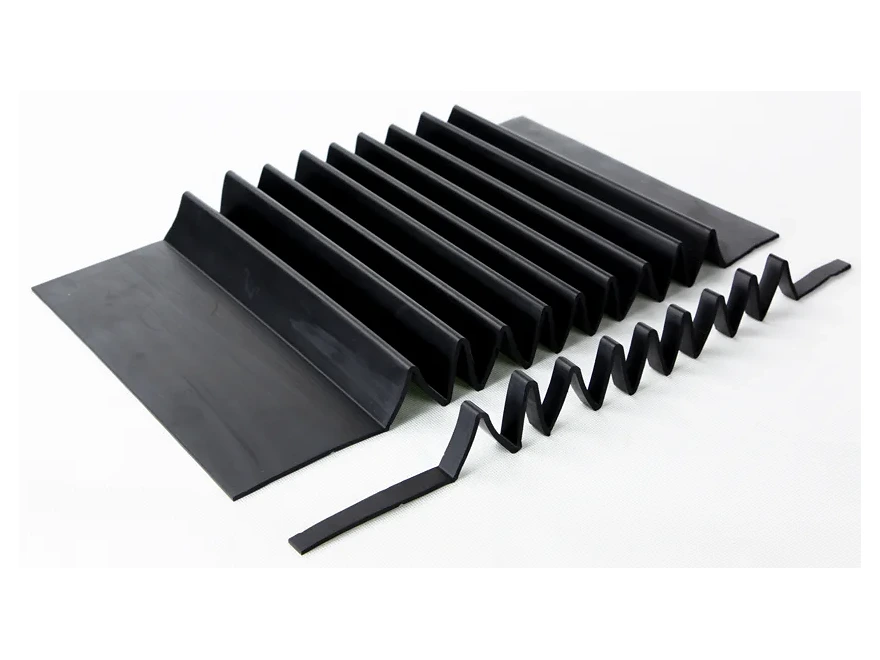
Take three widths between the same two edges
Mark two reference edges A and B that will remain identifiable after installation. Record their separation at installation, at the minimum design opening and at the maximum design opening. Installed width minus minimum width gives the required closing movement. Maximum width minus installed width gives the required opening movement. Identify any limit taken from design calculations rather than observed on site.
Draw movement along and across the joint
The sides may slide past each other while they open, or one side may rise above the other. Use a plan view for sliding along the joint and a cross-section for the step in height and opening direction. Indicate which motions can occur together. These directions affect how the fold and its attachment edges move.
Check the space occupied by the closed folds
At the narrowest opening, record the depth available between the mounting edges. Mark back plates, fasteners and cover edges near the folds. At the widest opening, show the position of each mounting foot relative to its retainer. If joint width varies along its length, add readings at identifiable stations and mark the tightest location.
Review a sample against the same reference edges
Mount a short sample in representative retainers and observe it through the agreed positions. Check for fold contact with a back plate, trapping at a gap or movement of a mounting foot. Photograph the installed, closed and open positions with A and B visible. The same record will support comparison if a later sample uses a different fold depth.